How Basketball Club Teams in San Diego Train for Tournament Success
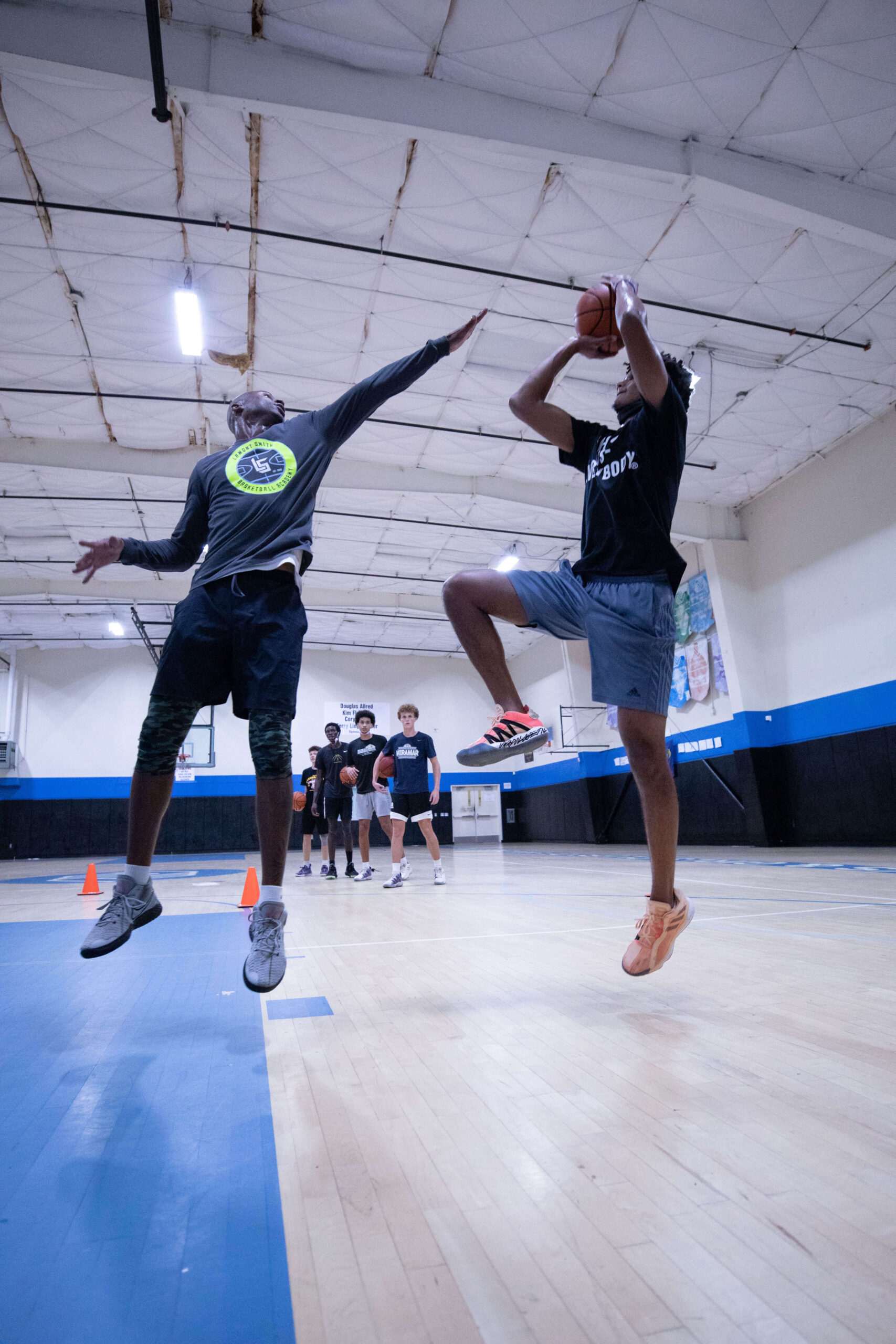
Tournament basketball has a way of exposing everything. A team can look sharp in a local league game on a Wednesday night, then run into trouble by the second quarter of a Saturday morning tournament opener. The pace is different, the pressure is different, and the margin for error gets smaller with every possession. That is why the strongest club programs in the county do not train simply to win drills or dominate random workouts. They train to handle tournament conditions, where fatigue, matchups, game management, and composure matter as much as talent.
For Basketball Club Teams San Diego families, that distinction becomes obvious fast. Players often move from school ball into the club circuit expecting more games and tougher opponents. What they discover is a more demanding process. The best club teams in the area build habits long before they arrive at a weekend event in Orange County, Las Vegas, Phoenix, or an NCAA live period. Their success is usually less about one spectacular scorer and more about preparation that holds up over three or four games in two days.
San Diego has a basketball culture that shapes this preparation in its own way. The region produces skilled guards, athletic wings, and a wide range of player backgrounds. Some athletes come from strong public school programs, others from private schools with year-round resources, and many from smaller settings where club basketball becomes their main high-level development environment. Add the travel demands, the level of Southern California competition, and the recruiting pressure older players feel, and training has to be both structured and practical.
Tournament training starts with a different question
A lot of teams make the mistake of asking, “How do we get better?” That sounds reasonable, but it is too broad to guide a serious club season. Better at what, exactly? Better against pressure? Better in transition defense? Better late in close games? Better when legs are heavy in the third game of the weekend?
The better programs narrow the focus. Coaches who consistently help teams perform in tournaments usually begin with a more specific question: “What will decide games when we play quality opponents on tired legs?” That is where real planning begins.
In my experience around youth and club basketball, tournament games are rarely decided by the most complicated plays. They are more often decided by the basics executed under stress. Teams that defend without fouling, rebound in traffic, handle traps, value the ball, and understand time and score give themselves a chance in almost every bracket. Teams that rely only on raw ability tend to look great until an opponent takes away the first option.
That is why training for tournament success often looks less glamorous than people expect. The strongest practices are not built around endless highlight moments. They are built around repetition with purpose, then pressure layered on top.
Skill work is tighter, faster, and more situational
Good club coaches in San Diego still care deeply about fundamentals, but the way those fundamentals are trained matters. Tournament preparation does not reward isolated skill work that never connects to real possessions. A player can make 200 uncontested jumpers in an empty gym and still struggle to get a clean look against a switching defense with a help defender at the nail.
The better teams bridge that gap early. Ball handling gets trained with a defender, a time limit, and a decision attached. Shooting gets trained off movement, closeouts, and kick-out timing. Finishing work includes contact, awkward angles, and weak-hand constraints. Passing is not just about technique, it is about reading tags, help rotation, and windows that open for a split second.
San Diego club teams that compete well in top events usually spend a lot of time in these in-between spaces. They are not abandoning fundamentals. They are hardening them. A clean shooting form matters, but so does being able to sprint from the corner, lift on a drive, catch with balance, and release before the contest arrives. Footwork matters, but so does using that footwork when the possession is messy.
There is also an important age-level distinction. Younger teams often need more pure repetition to build a base, especially around passing, spacing, and finishing. Older teams, especially on the high school travel circuit, need a heavier dose of game-speed constraints. By 16U and 17U, players who want college attention must show they can solve problems quickly, not just perform rehearsed moves.
Conditioning is built into basketball, not separated from it
Tournament weekends punish teams that train like basketball and conditioning are unrelated. Traditional running still has a place in some programs, particularly for building discipline and baseline fitness, but club teams that peak in tournaments usually condition through the game itself. That means short bursts, quick recoveries, repeated changes of direction, and concentration under fatigue.
A strong San Diego club practice often has a demanding tempo from start to finish. Players move from skill segments into small-sided competition, transition sequences, shell defense, rebounding battles, and situational scrimmage without long dead periods. Coaches are not just trying to get players tired. They are teaching them to think clearly while tired.
That distinction matters. In tournaments, physical fatigue and mental fatigue arrive together. A player misses a rotation not because he forgot the coverage in a calm setting, but because he is winded, frustrated, and processing the next action a half-second late. Teams that prepare for that reality look more composed in the final four minutes.
This is also where substitution patterns and roster construction come into the picture. Not every club team has deep numbers. Some groups rely heavily on six or seven players, especially once trust narrows during important events. When that happens, conditioning has to match role demands. A primary ball handler needs enough capacity to survive full-court pressure multiple times in a day. A post player needs repeated effort conditioning, because rim runs, rebounding, hedging, and second jumps drain energy differently than perimeter movement.
Defensive identity wins more travel games than offensive creativity
Offense tends to attract more attention, especially in the club scene where highlights travel quickly and scoring averages get posted everywhere. But teams that advance consistently in tournament play nearly always have a defensive identity. Not a random collection of effort plays, a real identity.
For some Basketball Club Teams San Diego, that means strong man-to-man principles, help-side positioning, and physical rebounding. For others, it may include matchup zones, pressing after makes, or switching actions one through four. The scheme itself matters less than the commitment to it. Players need to know exactly what the team is trying to take away and what rotations are expected when the first line gets broken.
The best defensive practices are demanding because they teach habits that hold under pressure. Closeouts are repeated until footwork becomes automatic. Gap help is corrected until players understand the difference between helping and overhelping. Box-outs are contested, not nodded at. Communication is expected from everyone, not just the point guard.
There is a revealing moment in many tournaments. It usually happens in the second half of a close game when both teams are tired and possessions get ugly. At that point, polished sets matter less than who can string together three or four reliable defensive possessions. A team that can guard the ball, contain penetration, finish the stop with a rebound, and avoid bailout fouls has a major edge.
Coaches in this region also have to prepare for stylistic variety. One weekend, a San Diego team may face a fast, guard-heavy opponent that thrives in transition. The next game might be against a bigger roster that pounds the offensive glass and slows the pace. Defensive training has to account for both. That means not just teaching a base scheme, but preparing players to recognize pace shifts and physical differences without losing discipline.
Practices are often built around tournament stressors
One of the easiest ways to tell whether a club program understands tournament basketball is to watch how it structures scrimmage segments. Random five-on-five with loose officiating and no consequences has limited value once a team gets beyond the earliest developmental stage. Strong tournament teams create practice situations that mirror the hardest moments of the weekend.
Sometimes that means starting a scrimmage down six with three minutes left. Sometimes it means giving one unit two team fouls and the other seven, then seeing whether players adjust their aggression. Sometimes it means forcing quick turnarounds, with one game-like segment ending and another beginning almost immediately to mimic the stop-start demands of a bracket day.
A few stressors show up repeatedly in effective training environments:
- playing against pressure after dead balls and made baskets
- defending without fouling when bonus rules tighten the game
- rebounding out of rotations, not just from a set half-court alignment
- executing late-game offense with limited timeouts and clear score awareness
- responding to poor officiating or momentum swings without emotional collapse
Those are not glamorous themes, but they travel well. They also reveal leadership. In tournaments, players cannot wait for a coach to solve every possession. They have to communicate coverages, settle each other down, and recognize when the game is tilting.
Film study is shorter and sharper than many people think
Parents sometimes assume advanced teams spend hours in the film room like college programs. In reality, effective club film work is usually compact. Attention spans, schedule constraints, and age level all matter. What works best is short, targeted review tied directly to upcoming needs.
For example, after a tournament game, a coach might show six clips on transition defense and two on end-of-quarter execution. That can be more useful than forty minutes of broad commentary. Players absorb film better when the coaching points are specific and actionable. “Sprint below the ball line” means something. “We need more effort” usually does not.
Film also becomes more valuable when players are taught what to look for. Younger athletes tend to watch the ball and miss spacing, timing, and weak-side responsibilities. Better programs teach them to read the whole possession. Where was the low man? Was the screen angle effective? Did the corner stay lifted too long? Was the tag early enough? Those details separate casual viewing from developmental film study.
In older age groups, film also helps with opponent preparation. A team may identify a favorite baseline out-of-bounds set, a ball screen tendency, or which player struggles against left-hand pressure. That is not about overcomplicating things. It is about giving players one or two useful reads that can swing key possessions.
Recovery is part of training, not a luxury
This is one of the biggest differences between organized club programs and teams that rely mostly on enthusiasm. Recovery gets treated seriously. Not professionally in the sense of cold tubs, nutritionists, and elaborate sport science systems for every roster, but seriously enough that players understand their bodies affect performance.
San Diego teams often travel frequently, and travel creates its own problems. Early check-ins, late games, long drives, inconsistent meals, and sleep disruption all chip away at performance. By the second day of a tournament, those details show. Legs flatten. Defensive slides get slower. Decision-making slips.
The better clubs educate players and families on practical recovery habits. Hydration starts the day before games, not after the first one. Meals need enough carbohydrates and protein to sustain repeated efforts. Sleep matters, especially for high school players tempted to treat travel weekends like social events. Warm-ups and cooldowns need consistency, because the body feels very different before game three than it does in the first tip.
A sensible recovery checklist usually includes:
- arriving hydrated rather than trying to catch up courtside
- eating simple, digestible meals between games
- changing out of sweaty gear and keeping muscles from tightening up
- using short mobility work instead of sitting still for hours
- protecting sleep the night before and between tournament days
None of that sounds dramatic, but teams lose winnable games every season because they neglect the ordinary. Recovery is one of the most ordinary and most important pieces.
Roles are defined clearly, even when talent is spread out
Club rosters often include players who were stars on their school or feeder teams. Put enough of those players together, and confusion can follow. Who initiates offense? Who takes the late-clock shot? Who rebounds outside their area? Who talks on defense? Who settles the group after a turnover run?
Successful teams sort that out well before the biggest events.
Role definition does not mean putting players in a box forever. Development still matters. A wing may need reps on the ball. A post may be expanding range. A younger player may be growing into a larger responsibility. But during tournament competition, clarity helps everyone. Players perform better when they know what the team needs from them on this roster, in this event, against this level of opponent.
Coaches who communicate roles well tend to avoid two common mistakes. First, they do not promise equal usage when the roster does not support it. Second, they do not reduce players to labels so rigidly that confidence disappears. The best approach is honest and specific. A reserve guard might hear, “We need your defensive pressure and pace for six strong minutes each half.” A shooter might hear, “Your spacing matters even when you do not touch the ball for two possessions.” A big might hear, “Your screening and rim protection are as important as your scoring.”
That kind of clarity shows up in close games. Teams with loose roles often hesitate. Teams with established roles react faster and trust each other more.
San Diego’s basketball environment shapes how teams prepare
Training methods do not exist in a vacuum. The local basketball ecosystem matters. San Diego sits in a competitive corridor where club teams can find quality opposition almost year-round, but they also have to measure themselves against strong programs from Los Angeles, the Inland Empire, and beyond. That creates both opportunity and pressure.
On the positive side, teams can test schemes regularly against athletic, skilled opponents. Players see length, speed, and physicality that force adaptation. Coaches get honest feedback quickly. If a team cannot handle pressure or guard ball screens, local and regional competition will make that clear.
There are challenges too. Gym space is expensive and limited. Multi-sport athletes juggle demanding schedules. School seasons can interrupt continuity. Some players bounce between training providers, personal skill coaches, and team practice, which can help development but also create mixed messages if communication is poor. A player may spend the week working on advanced off-the-dribble scoring, then arrive at club practice needing to fit into a motion offense that values quick decisions and spacing discipline.
The strongest Basketball Club Teams San Diego manage those tensions well. They respect individual development while protecting team identity. They understand that not every player has the same resources or schedule. They push, https://privatebin.net/?a6b59b99e0e29e7c#5DbYbN46nFMhkfNfaDH9bwcLJV4r1AcpuozZKCANrnqD but they adjust. A smart coach knows the difference between holding standards and pretending every roster lives under college-level conditions.
Parents often underestimate the mental side
Physical tools stand out first, but tournament success usually depends on emotional control. That is especially true in youth basketball, where momentum swings hard and players are still learning how to process adversity. A missed call, a bad start, a hot opponent, or a long scoring drought can unravel a team that is technically skilled but mentally fragile.
Good club programs train this more than people realize. They talk about body language. They address response after mistakes. They teach players to move to the next play instead of replaying the last one. They create competitive drills where frustration surfaces and then coach through it.
This work is subtle, and it matters. The team that survives a rough first quarter without panic often ends up in the better bracket position. The player who gives up an and-one but answers with a composed defensive stop on the next possession is more valuable than the player who hangs his head and commits another foul thirty seconds later.
Parents can help here by understanding the emotional demands of the circuit. Constant sideline commentary, postgame criticism in the car, and unrealistic expectations wear players down. Athletes need accountability, but they also need room to compete, fail, adjust, and grow. The best environments create pressure without making every possession feel like judgment day.
What separates good club teams from tournament-ready club teams
There are plenty of good teams with talent, enthusiasm, and moments of brilliance. Tournament-ready teams are different. They are less surprised by hard games. They know how they want to defend. They understand late-game spacing. They recover between contests. Their best players can carry responsibility without hijacking structure. Their role players are prepared, not ornamental.
Most importantly, they practice in a way that predicts the games they expect to face.
That is the real secret, if there is one. Tournament success is rarely a mystery. It usually traces back to habits formed weeks earlier in ordinary gyms, during sharp but repetitive work that did not look exciting from the bleachers. A closeout done correctly for the hundredth time. A ball screen coverage talked through again. A late-game possession replayed until everyone knows the read. A reminder to hydrate. A correction on body language. A role clarified before resentment has room to grow.
Those details do not trend online, but they win games in March, April, July, and whenever the bracket tightens. For Basketball Club Teams San Diego, the path to tournament success is not built on hype. It is built on preparation that stands up when the weekend gets hard.
Lamont Smith Basketball Academy
888 Clairemont Mesa Blvd Suite T-2, San Diego, CA 92123
(619) 639-8778
FAQ About Basketball Club Teams San Diego
How can a player join an LSBA club team?
Players are evaluated during practices so the coaching staff can recommend an appropriate team and development level. Families should contact the academy to confirm current openings and evaluation details.
Are club teams available for newer basketball players?
Yes. LSBA describes multiple levels, including a developmental option for newer players as well as more competitive teams for athletes with prior club experience.
What do LSBA club team practices emphasize?
Practices emphasize basketball fundamentals, team defense, structure, communication, and player development. The specific focus may vary according to the team and experience level.
Do all LSBA teams travel?
Travel expectations vary by level. Some teams focus on local competition, while advanced teams may participate in tournaments elsewhere in Southern California or beyond. Families should confirm the current schedule before enrolling.